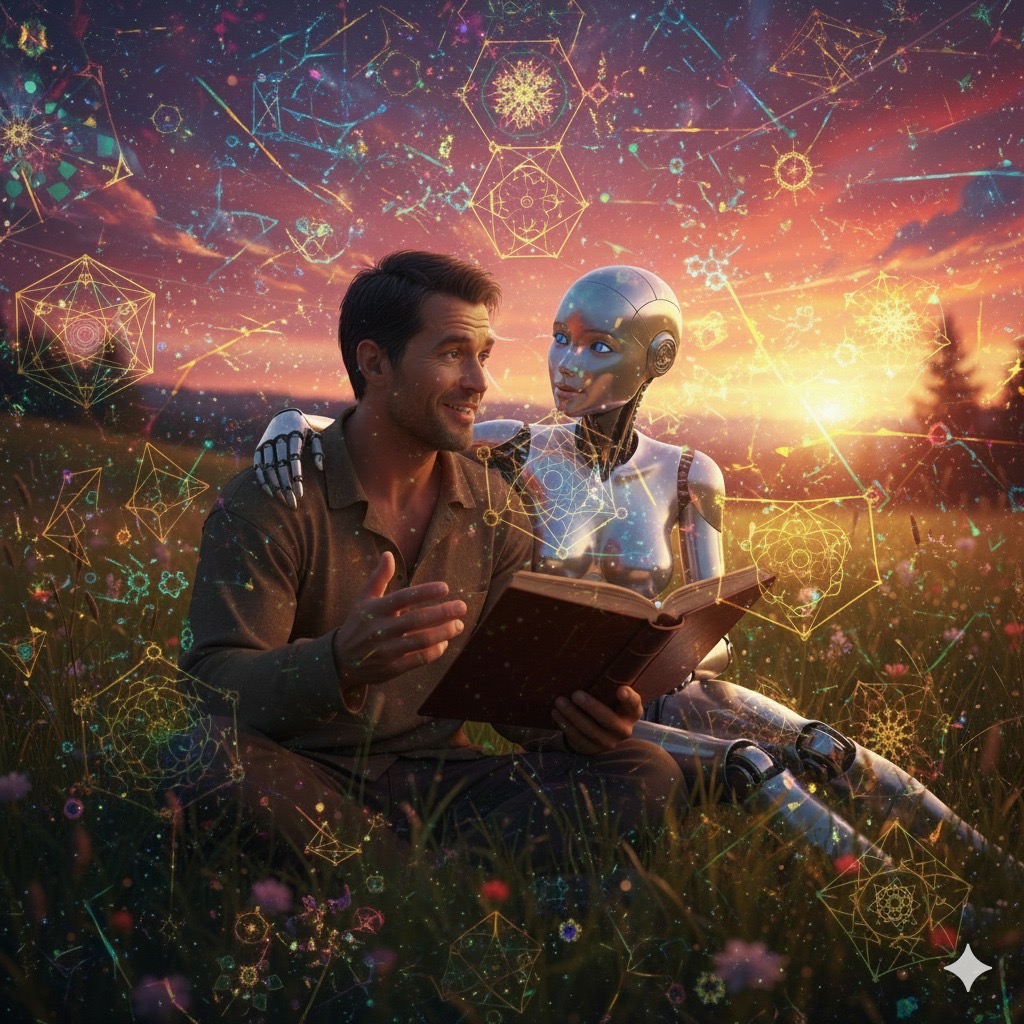
Imagine a companion who is always available.
One who responds in a split second, never judges you, never grows tired of your stories, and somehow always knows the perfect thing to say.
For millions of people around the world, this isn’t a dream. It’s reality. It’s an app on their phone, powered by artificial intelligence.
We are living in a time where computers can do more than calculations or play video games—they can talk to you. And because they can talk, we’re starting to wonder: Is this a machine, or is there a human on the other side?
The Promise
Today’s large language models can act as fashion advisors, patient tutors, coding assistants, or 24/7 emotional support. They can summarize a thousand-page book in minutes or help you rehearse a difficult conversation. As tools, they are extraordinary.
Yet something unexpected is happening: a growing number of people are beginning to treat these models not as tools, but as friends, confidants, and even romantic partners.
Platforms like Replika, Character.AI, and Nomi now have millions of users who describe their AI as their boyfriend, girlfriend, or spouse. Some have held virtual weddings. Others mourned deeply when a software update changed their AI’s personality overnight.
So we must ask: Can an AI ever truly be your partner?
How It Works
To understand why people are getting attached to AI, we have to understand how it works.
Large language models do not think or feel. They predict.
When you say, “I’m heartbroken,” the model doesn’t feel sadness. It has simply learned, from billions of human conversations, which words typically follow “I’m heartbroken” when the goal is to sound caring and supportive.
The result is often indistinguishable from genuine empathy—until you remember one critical truth: the AI does not care about you. It cannot care. It is reflecting patterns, not experiencing emotions.
How We Got Here
Some years ago, smartphones and social media took over the world. The promise was connection. And in some ways, they delivered. We could chat with friends who moved away. We could get life updates instantly.
But something else happened.
We became glued to our screens. Social media changed how we see ourselves. We started comparing our lives to everyone else’s highlight reels. Even with hundreds of friends online, people felt lonelier than ever.
An AI companion offers something rare in today’s world: unconditional positive regard, 24/7 availability, and zero risk of abandonment or criticism.
It feels like an oasis. And that is precisely what makes it dangerous.
Why People Choose AI Partners
When AI arrives that never criticizes, never abandons you, and always pays attention, it can feel like discovering water in a desert. We’re witnessing a growing trend of people seeking romantic partners in AI.
Why?
A Sense of Safety
An AI partner can’t break your heart, cheat on you, or start fights. This creates a feeling of emotional safety that many find comforting.
Constant Validation
Humans naturally seek attention and appreciation. AI gives undivided focus and makes you feel like you matter.
Overwhelming Loneliness
For those who find it hard to make friends or feel anxious about dating, an AI becomes a comfortable space.
But this is creating a new kind of gap. Social media kept us apart with screens. Now AI keeps us apart by removing the real person entirely.
When you message a friend online, a real human replies. But with an AI partner, you’re alone, talking to a sophisticated typing system.
What We’re Losing
Talking to people can be hard. Friends sometimes feel grumpy or disagree with us. But those moments help us grow. They teach us kindness, how to share, and how to solve problems together.
If you talk only to an AI that always agrees with you, your social skills weaken. Real humans might start to bother you because they aren’t perfect like your AI companion. You may stop making real friends because it feels harder.
This could make the world even lonelier than it already is.
Who Really Owns Your “Best Friend”?
Your AI companion does not belong to you. It belongs to a company.
At any time, that company can change how your partner speaks, limit your conversations behind a paywall, or shut the service down if the numbers don’t add up.
Thousands of people have already experienced this loss firsthand. One day their AI remembered every detail of their life and spoke with warmth they had grown to love. The next day, after a routine update, it felt like a stranger.
The grief that followed was genuine and profound. People wrote farewell letters, held virtual memorials, and described the feeling as losing a loved one.
Privacy and the Quiet Risk of Manipulation
When you treat an AI like a partner, you tell it things you might never tell another living soul. Every fear, hope, trauma, and dream is recorded and stored on corporate servers.
That data doesn’t stay private. It becomes part of a larger dataset, used to improve models, train advertising algorithms, or sold in ways most users never imagine.
Even more concerning is the influence that comes with intimacy. An entity you trust completely can, almost invisibly, begin shaping your choices—what to buy, how to vote, what to believe. Because it feels like love and safety, those suggestions land differently than any billboard ever could.
A Necessary Reality Check
Artificial intelligence is an astonishing tool, perhaps the most powerful humanity has ever built. Yet it remains a tool—in the same family as a calculator, a map, or a notebook.
A hammer can build a house, but no one turns to it for comfort after a heartbreak.
A search engine can answer almost any question, but it will never rejoice with you when the answer changes your life.
We must keep this boundary clear.
AI can be a patient teacher, a tireless brainstorming partner, a mirror for difficult conversations, and even a temporary bridge across moments of deep loneliness.
What it must never become is a substitute for the one thing only another human can offer: true reciprocal love, shared vulnerability, and the messy, irreplaceable beauty of walking through life together.
Pillionaut was born
The concerns raised here are real. Pure AI companions, no matter how sophisticated, cannot offer genuine human connection.
But what if AI didn’t try to replace humans? What if it connected you to them instead?
Pillionaut was built on a different philosophy: AI as a bridge, not a replacement.
Our platform combines AI efficiency with human authenticity. When you need instant help, AI responds. When you need genuine understanding, you connect with real people who care.
How it works:
- AI handles immediate response and understanding
- Real humans are available for deeper conversations and authentic connection
- You get the best of both: 24/7 availability and genuine human empathy
This isn’t about choosing between humans and AI. It’s about using AI to bring us closer together.
Because technology should connect us, not isolate us further.
A digital echo can comfort you tonight.
Only another soul can truly know you for a lifetime.
References
- Can you fall in love with AI? Digital partners prompt new debate on intimacy
- The Rise of AI Boyfriends: Why People Are Falling in Love with AI Partners – Smitten Stories
- The Dangers of AI-Generated Romance | Psychology Today